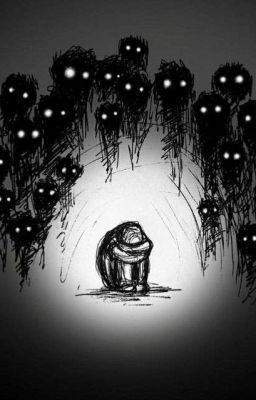
Sometimes the red flag isn’t that he doesn’t love you. Sometimes it’s that he wants to own the version of you he cannot become.
I have been thinking a lot about the things we call love when, in reality, they are control.
The jealousy we romanticize.
The constant checking-in we call concern.
The invasion of privacy we call trust.
The anger we excuse because “he was just hurt.”
And sometimes, we don’t recognize the red flags while we are living through them.
I know this because I have been there.
I once had a situationship that, if I am being completely honest with myself, I lied about.
I lied to myself that I loved him.
And I lied to him too.
Maybe I wanted to believe that what we had was love because admitting that it wasn’t would have meant admitting that I was staying somewhere that wasn’t good for me.
He didn’t know how to love me either.
And perhaps that should have been enough of an answer.
But sometimes we stay long enough for the situation to become something much more complicated than the feelings we started with.
It started with the imbalance
I don’t say this to suggest that one person is “better” than another because of education, money, career, or achievements.
But there was a clear difference between us.
I had just returned from China. I had a Master’s degree. I had a good job. I was financially independent. I was paying rent in the very house we were living in.
I had worked hard for the things I had.
And I think, somewhere along the way, my independence became threatening to him.
When someone is secure within themselves, your achievements don’t diminish theirs.
They celebrate you.
They don’t compete with you.
They don’t need to make you smaller so they can feel bigger.
But when insecurity enters a relationship, your light can start feeling like an attack to someone who hasn’t made peace with their own darkness.
And that’s when control can begin to masquerade as love.
The night he went through my phone
I remember one particular night.
We were both asleep.
At some point, he woke up and started scrolling through my phone.
My phone.
My private conversations.
My personal space.
Without asking.
At the time, perhaps I didn’t fully understand what that moment represented.
But looking back, I see it differently.
That wasn’t intimacy.
That wasn’t love.
That wasn’t trust.
That was an invasion of privacy.
There is a difference between a partner having access to your phone because you freely choose to share it and someone believing they are entitled to search through your private life because they are afraid of what they might find.
And that’s something I wish more people understood:
Being in a relationship does not mean surrendering your privacy.
You can love someone and still have boundaries.
You can be committed and still have autonomy.
You can be honest without being monitored.
Then came the night I came home at 7:30 p.m.
Two days later, we had a confrontation.
I had come home late.
And when I say late, I mean 7:30 p.m.
I remember thinking, How is this even a conversation?
I was an adult.
I was working.
I was paying rent.
I had responsibilities.
Yet somehow, I found myself being questioned as though I needed permission to exist outside that house.
And then the words started.
He attacked my education.
“You have a Master’s degree and it isn’t helping you.”
That sentence stayed with me.
Not because I believed it.
But because I realized that when someone cannot compete with what you have built, they may try to convince you that what you have built isn’t valuable.
At that time, I had just returned from China and had secured a good job.
And, yes, my salary was actually better than his.
But this isn’t about who earned more.
It is about what happened when he felt inadequate.
Instead of dealing with his insecurity, he tried to make me feel inadequate.
That is the part we need to talk about.
When jealousy becomes control
We often romanticize jealousy.
“He is jealous because he loves me.”
“He doesn’t want anyone else to have me.”
“He is protective.”
But jealousy can become dangerous when it turns into entitlement.
When someone starts believing:
“Because you’re my girlfriend, I have the right to monitor you.”
“Because you’re my girlfriend, I can decide when you should come home.”
“Because you’re my girlfriend, I can search your phone.”
“Because you’re my girlfriend, I can dictate who you talk to.”
That isn’t love.
That’s control.
And control often grows from insecurity.
The problem isn’t that someone feels insecure.
We are all human. We all have insecurities.
The problem is what someone does with those insecurities.
Do they communicate?
Do they work on themselves?
Do they trust you?
Or do they try to control you so they don’t have to confront themselves?
And then he broke my phone.
My iPhone 14 Pro Max.
The phone I had bought with my own hard-earned money.
I remember thinking about how absurd the whole situation was.
This was something I had worked for.
Something I had purchased for myself.
And during that confrontation, he broke it.
That moment changed the way I understood anger.
Because destroying someone’s property isn’t just about the object.
It can be about sending a message:
“Look what I can do when I’m angry.”
And that message can make you afraid of what might happen next time.
We sometimes laugh off these things.
“He was angry.”
“He lost his temper.”
“It’s just a phone.”
But it wasn’t just a phone.
It was my property.
My money.
My boundary.
And more importantly, it was an act that crossed a line.
Anger does not give anyone permission to destroy what does not belongs to you.
The red flags we excuse
Looking back, there were signs.
The phone checking.
The questioning.
The jealousy.
The attempts to make me feel inadequate.
The insults.
The control over my movements.
The way my achievements became something to attack instead of celebrate.
The destruction of my property.
And perhaps the biggest red flag was how much I started having to explain myself.
Why was I home late?
Who was I talking to?
Where was I?
Why did I do this?
Why did I do that?
At some point, you stop living your life and start managing someone else’s emotions.
You begin calculating every decision based on:
“How will he react?”
And that is a dangerous place to be.
But let’s talk about the part nobody wants to admit
Sometimes the person controlling you isn’t necessarily the person everyone else sees.
He can be charming.
He can be funny.
He can be generous.
He can be loving in public.
People can genuinely like him.
And you can still be experiencing something completely different behind closed doors.
That’s why I don’t believe we should only teach people to look for the stereotypical “bad boyfriend.”
We need to teach people to recognize patterns of behavior.
A man doesn’t have to hit you for the relationship to become unsafe.
He doesn’t have to scream every day.
He doesn’t have to threaten you every morning.
Control can be quiet.
It can sound like:
“Where are you?”
“Who are you with?”
“Why didn’t you tell me?”
“Give me your phone.”
“You don’t need those friends.”
“Why do you dress like that?”
“If you loved me, you wouldn’t do that.”
“Your degree isn’t helping you anyway.”
And eventually:
“You can’t do anything without me.”
The goal of control is often to make you question your autonomy until you begin asking for permission to be yourself.
A relationship should not require you to become smaller
One of the greatest lessons I took from that experience is this:
The right person will not need you to become less impressive so they can feel more important.
Your education shouldn’t threaten him.
Your career shouldn’t threaten him.
Your salary shouldn’t threaten him.
Your friendships shouldn’t threaten him.
Your independence shouldn’t threaten him.
Your confidence shouldn’t threaten him.
Your light shouldn’t threaten him.
A healthy partner doesn’t look at your accomplishments and think:
“How do I bring her down?”
They think:
“How can I support her?”
And to the woman reading this…
Maybe you have been calling control love.
Maybe you have been calling jealousy passion.
Maybe you have been calling surveillance care.
Maybe you have been calling insults honesty.
Maybe you’ve been explaining away his behavior because you love him.
Maybe you’ve even convinced yourself:
“He’s only like this because he cares so much.”
Please pause.
Ask yourself:
Do I feel safe saying no?
Can I make decisions without fearing his reaction?
Does he respect my privacy?
Does he celebrate my growth?
Can I have friendships outside the relationship?
Does he take responsibility when he hurts me?
Am I becoming more myself in this relationship, or am I slowly disappearing?
Because love should give you room to breathe.
Love should not require surveillance.
Love should not require fear.
Love should not require you to prove your loyalty by surrendering your freedom.
And love should never require you to make yourself smaller so someone else can feel big.
I don’t regret the lesson.
Would I make different choices now?
Absolutely.
But I also refuse to shame the woman I was for not recognizing everything immediately.
Sometimes we understand things only after we’ve survived them.
Sometimes the red flags become obvious in hindsight.
And sometimes healing means looking back at the version of yourself who tolerated something and saying:
“You were trying to survive with the knowledge you had at the time.”
I don’t have to hate her.
I can understand her.
And I can protect her now.
The red flag isn’t always the jealousy.
Sometimes it’s what someone does because of the jealousy.
It’s not simply that they feel insecure.
It’s that they punish you for their insecurity.
It’s not simply that they’re afraid of losing you.
It’s that they try to control you so they never have to experience that fear.
It’s not simply that they want reassurance.
It’s that they demand access to your entire life as proof of your love.
And that’s where we need to draw the line.
Love is not ownership.
Protection is not control.
Jealousy is not proof of love.
Anger is not an excuse for abuse.
And your independence is not something you should have to apologize for.
Sometimes the most powerful thing a survivor can do is stop asking,
“How can I make him love me properly?”
and start asking,
“Why am I accepting a love that requires me to abandon myself?”
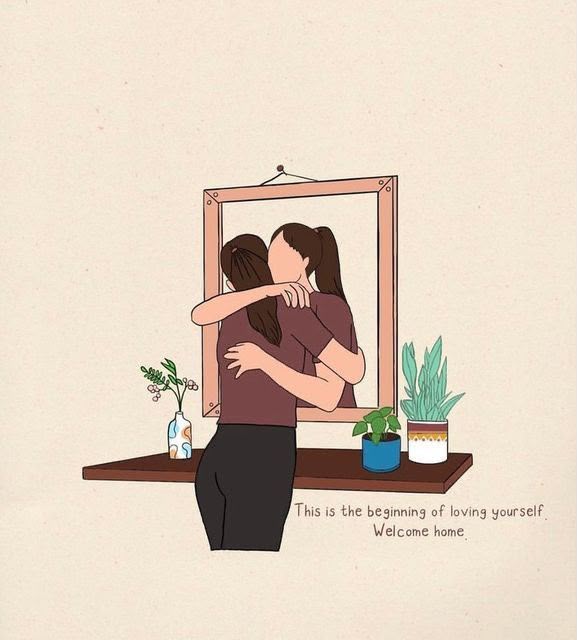
That question can be the beginning of coming home to yourself.