A story about childhood, triggers, and the little girl who grew into a woman
There was once a little girl who didn’t know what trauma was.
She didn’t know what anxiety meant.
She didn’t know what stress was.
She didn’t know that the body could remember things the mind would eventually struggle to explain.
She was just a little girl.
And little girls are supposed to laugh.
They are supposed to play until someone calls them inside.
They are supposed to make too much noise, ask too many questions, dance badly, sing loudly, get excited over the smallest things, and find joy in places adults have forgotten how to look.
This little girl knew none of the heavy words adults carry.
She only knew happiness.
She only knew laughter.
Until one day, something changed.
The shower
She was in the shower with her older sister.
Her sister was washing her, and the little girl was laughing.
Not because something extraordinary had happened.
Not because she was trying to disturb anyone.
She was simply happy.
The kind of happiness children have before life teaches them to measure it.
Then, from outside, came a voice:
“Who is that laughing? Cover yourself and come out.”
And just like that, everything changed.
The laughter that had been innocent one minute suddenly became a nuisance.
The joy that had filled the room suddenly felt dangerous.
She came out.
And she was beaten for laughing.
Think about that for a moment.
A child.
Laughing.
And learning that her happiness could make someone angry.
She didn’t have the words to understand what had happened.
She couldn’t sit down afterward and say,
“That experience has made me feel unsafe expressing joy.”
She was a child.
She probably just learned the lesson her little mind could understand:
Don’t laugh too loudly.
Don’t make too much noise.
Don’t attract attention.
Be careful.
And perhaps most painfully:
Someone can become angry when you are happy.
We often underestimate what children remember
Adults sometimes remember childhood incidents as small things.
“It was just one beating.”
“That happened years ago.”
“Children forget.”
But children don’t always need to understand an experience for it to affect them.
Sometimes they simply adapt.
They watch.
They learn.
They become quieter.
They become more careful.
They begin studying the faces and voices around them.
They learn when to speak.
When not to speak.
When to laugh.
When to stop laughing.
When someone is approaching.
When footsteps sound different.
When a door closes harder than usual.
When a voice changes.
The child may not know the word hypervigilance.
She simply knows:
“I need to be careful.”
And then she grows up
The little girl doesn’t stay little forever.
She goes to school.
She makes friends.
She grows.
She becomes a teenager.
Then a young woman.
Then one day, she is thirty.
Thirty.
An adult woman who can pay her own bills, make her own decisions, build a career, travel, fall in love, leave relationships, and choose the life she wants.
But somewhere inside her is still that little girl in the shower.
And sometimes, she comes back.
Not literally.
But through triggers.
The first trigger: laughter
Maybe she is with friends one evening.
Everyone is laughing.
Someone tells a ridiculous story.
She laughs loudly.
For a second, she is completely free.
Then she hears a sharp voice from across the room.
And something inside her changes.
Her laughter stops.
Her body becomes tense.
She may not even know why.
The people around her don’t understand.
“Why did you suddenly go quiet?”
She doesn’t know how to explain it.
How do you explain that your body just remembered something your adult mind thought was long gone?
The second trigger: being told she’s too loud
Someone tells her:
“You’re too loud.”
It might not even be said aggressively.
But her body doesn’t know that.
Her body remembers.
Suddenly, she is eight years old again.
Standing outside the bathroom.
Trying to understand why something so innocent made someone angry.
So she becomes quiet.
She lowers her voice.
She watches herself.
She edits herself.
Not because she wants to.
Because somewhere deep inside, she learned that being too visible could have consequences.
The third trigger: hearing footsteps
Sometimes it isn’t even words.
It’s footsteps.
The sound of someone walking toward her with anger in their body.
A door opening suddenly.
A heavy sigh.
A particular tone of voice.
A raised voice from another room.
And suddenly her nervous system reacts before she can reason with it.
Her heart beats faster.
Her muscles tense.
She becomes alert.
What did I do?
Is someone angry?
Am I in trouble?
She is thirty years old.
But her body doesn’t always know that.
The fourth trigger: making a mistake
Perhaps she spills something.
For most adults, it’s just a mistake.
Clean it up.
Move on.
But for her, mistakes can feel enormous.
Because childhood taught her that small things could bring disproportionate consequences.
So she becomes a perfectionist.
She apologizes too much.
She explains herself before anyone has accused her of anything.
She fears disappointing people.
She may even panic when someone says:
“We need to talk.”
Because somewhere inside her, those words don’t simply mean a conversation.
They mean:
Something bad is about to happen.
The fifth trigger: being watched
Maybe she is dancing.
Maybe she’s singing.
Maybe she’s simply enjoying herself.
Then she notices someone looking at her.
And suddenly, the joy disappears.
She becomes self-conscious.
She stops.
She wonders:
Was I doing too much?
Was I embarrassing myself?
Was I being too loud?
Was I attracting too much attention?
She doesn’t realize that she may have spent years learning to monitor herself.
The little girl who was punished for laughing learned that visibility wasn’t always safe.
So the woman became skilled at disappearing.
The sixth trigger: anger
She may become extremely uncomfortable around angry people.
Even when the anger isn’t directed at her.
Someone raises their voice.
Someone slams a door.
Someone becomes frustrated.
And she freezes.
She might leave the room.
She might become unusually quiet.
She might try to calm everyone down.
She might immediately start thinking:
“What can I do to make this situation safe again?”
Because children who grow up around unpredictable anger can sometimes become experts at reading the room.
They learn everyone’s moods before anyone says a word.
And then there is the strangest trigger of all: happiness
Perhaps this is the one nobody talks about.
What happens when happiness itself feels unsafe?
When you have learned, very early, that joy can be interrupted by anger, you may begin to hold yourself back.
You don’t celebrate too loudly.
You don’t get too excited.
You don’t make too much noise.
You don’t allow yourself to be completely carefree.
You are happy but cautiously.
You laugh but you check the room.
You celebrate but quietly.
You love but you keep one foot near the exit.
Because somewhere inside you lives a child who learned:
“Good moments can change very quickly.”
But she was never the problem
This is the part I want that little girl to know.
She was not bad.
She was not disrespectful.
She was not doing something deserving of punishment.
She was laughing.
She was being a child.
And perhaps the most heartbreaking thing about childhood trauma is that children often take responsibility for things that were never theirs to carry.
She didn’t understand the adult’s anger.
So maybe she concluded that there was something wrong with her.
Maybe she thought she was too loud.
Too playful.
Too much.
Maybe she learned to apologize for taking up space.
Maybe she grew into a woman who constantly wonders whether she is “too much.”
Too emotional.
Too ambitious.
Too loud.
Too happy.
Too independent.
Too expressive.
Too demanding.
Too visible.
When perhaps the truth is much simpler:
She was never too much.
She was simply a child who deserved to feel safe.
Thirty years old and still learning to laugh
Imagine that little girl now.
She is thirty.
She has survived things her younger self could never have imagined.
She has learned words like trauma, anxiety, triggers, boundaries, healing, and nervous system.
She understands things now that she couldn’t possibly have understood then.
And maybe she is finally beginning to see herself differently.
Maybe when her body reacts, she no longer asks:
“What’s wrong with me?”
Maybe she asks:
“What happened to me?”
That is a very different question.
One carries shame.
The other carries compassion.
Maybe healing is letting her laugh again
Maybe healing isn’t about forcing the memories away.
Maybe it isn’t about pretending that nothing happened.
Maybe healing is slowly teaching that little girl something new:
You are allowed to laugh.
You are allowed to be loud.
You are allowed to dance.
You are allowed to make mistakes.
You are allowed to take up space.
You are allowed to be happy without waiting for someone to punish you for it.
You are allowed to exist without constantly monitoring the emotional temperature of everyone around you.
And when your body reacts to something that happened years ago, you don’t have to hate yourself for it.
You can gently remind yourself:
“That was then. This is now.”
“I am not that little girl anymore.”
“I am safe to have a voice.”
“I am safe to experience joy.”
To the little girl who became a woman
I wish someone had told you that day:
You were not wrong for laughing.
I wish someone had protected your joy instead of punishing it.
I wish you had known that the anger belonged to the adult not to you.
I wish you hadn’t had to learn so early that happiness could be dangerous.
But most of all, I wish the thirty-year-old you could go back and hold that little girl.
Not to erase what happened.
Not to tell her she shouldn’t have laughed.
But to whisper:
“Baby girl, you did nothing wrong.”
“You were just happy.”
“And you are still allowed to be.”
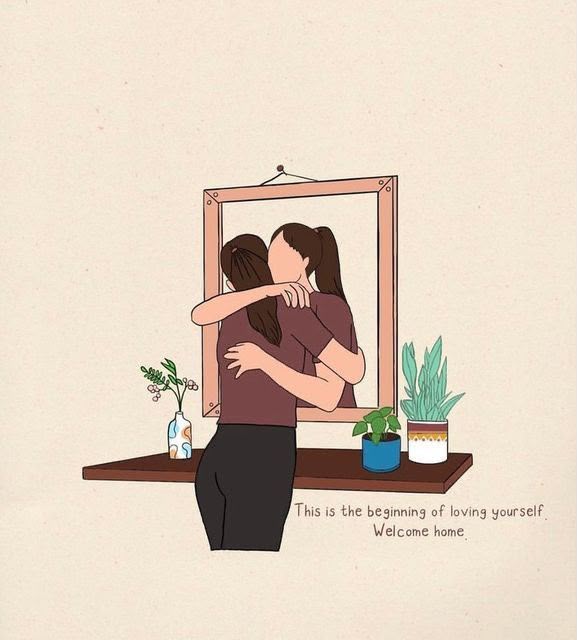
Perhaps that is what homecoming to self really means.
Returning to the parts of ourselves we abandoned because they once felt unsafe.
Returning to our laughter.
Returning to our bodies.
Returning to our voices.
Returning to our joy.
Returning to the little girl who learned to shrink.
And telling her:
You don’t have to be small anymore.
A note to the reader
Sometimes the things that trigger us in adulthood don’t seem to make sense.
A tone of voice.
A slammed door.
Someone saying our name sharply.
Being told we’re too loud.
Making a mistake.
Someone being angry.
Even allowing ourselves to be happy.
Our reactions can feel bigger than the moment.
That doesn’t mean we are broken.
It can mean that something in us learned to associate the present with an earlier experience.
Understanding that connection can be a powerful part of healing.
And if this story feels familiar, please remember:
You are not your triggers.
You are not the little girl who learned to survive.
You are the woman who gets to teach her something new.
You get to laugh again.
You get to live.
You get to come home to yourself.